
There are some parts of parenting that we’re really quite good at talking about.
Meet a friend for coffee and it probably won’t take long before you’re chatting about the children. We talk about the sleepless nights, friendship dramas, worries about school, confidence wobbles and anxiety. We swap stories, compare notes and, quite often, discover that the thing we’ve been worrying about is happening in somebody else’s house too.
There’s something incredibly reassuring about hearing another parent say, “Oh yes, we’ve had that too.”
But there are other parts of parenting that we don’t seem to talk about quite so easily.
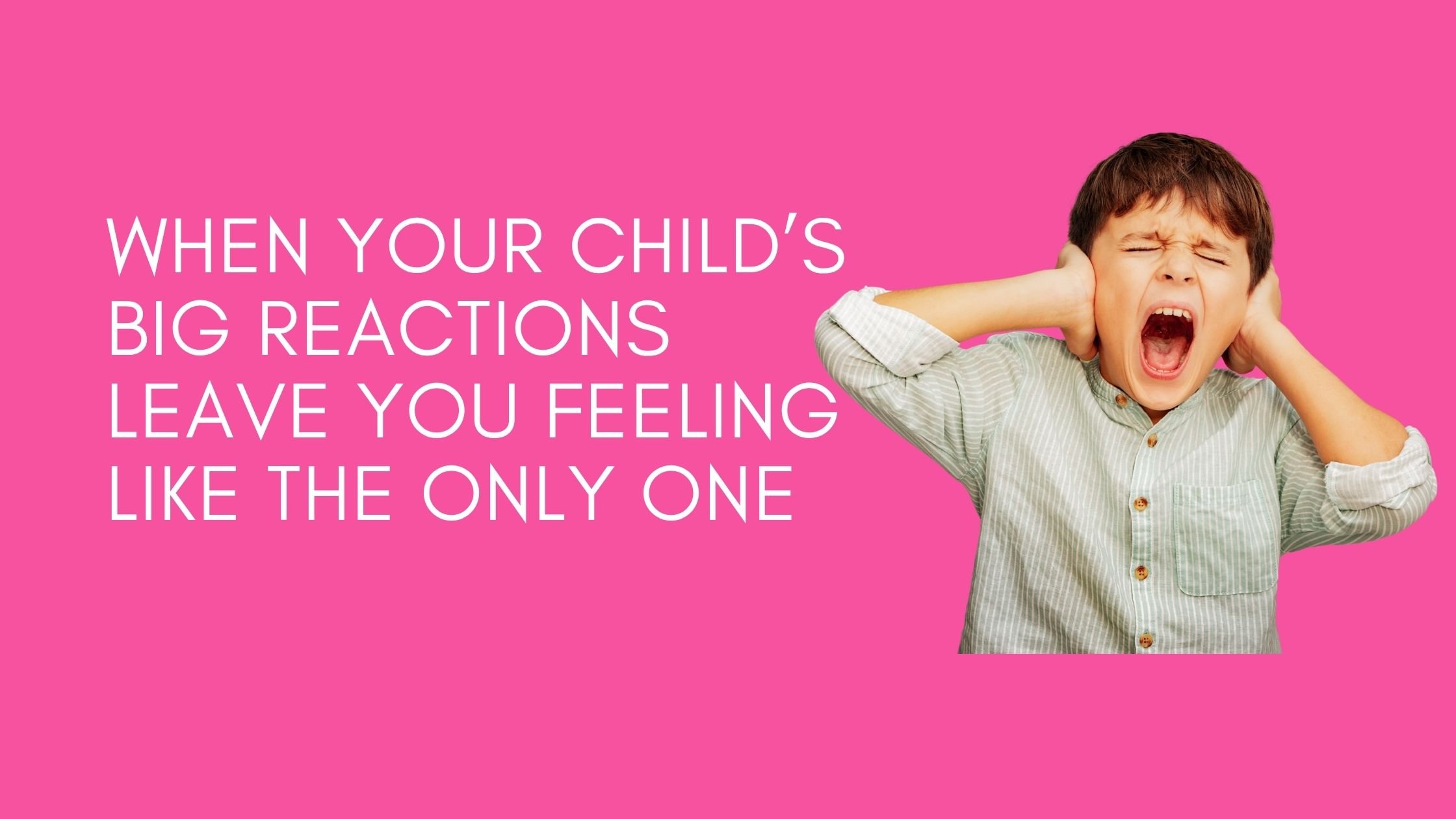
The enormous outburst because you’ve asked your child to turn off the iPad. The screaming because their sibling sat in their seat. The bedroom door slammed so hard you wondered whether it might come off its hinges. The child who appeared perfectly happy five minutes ago and is now completely beside themselves because their toast broke.
And perhaps the bit we’re even less likely to admit: the moment when we lose it too.
The parenting conversations we tend to keep quiet
I think there can still be a real stigma attached to children who experience big, explosive reactions. It can feel much easier to tell somebody that your child is feeling anxious about school than to say, “We had a horrendous evening last night. They screamed at me for 40 minutes and I had absolutely no idea what to do.”
Because saying that out loud can leave us feeling quite exposed.
We might worry that somebody will think our child is badly behaved. We might wonder whether they’ll think we’re too soft, too strict or somehow getting parenting wrong. And when a big reaction has happened in public - at the park, in a restaurant, outside the school gates - that feeling can be magnified even further.
So often, we don’t say anything.
The problem is that when nobody talks about these experiences, it’s very easy to look around and assume nobody else is having them.
Other families seem to be getting through dinner without somebody exploding because the foods are touching. Other children appear to leave the playground when they’re asked. Other parents seem to say, “Time to get your shoes on,” without setting off a chain of events that leaves the whole household frazzled.
From the outside, at least.
Behind closed doors, far more families are navigating big emotions, explosive outbursts and behaviour that can feel incredibly difficult to manage than we often realise. And I think we need to talk about that, because parents living with big reactions need support and understanding, not another reason to wonder whether they’re doing something wrong.
When the reaction seems far bigger than the problem
One of the things parents often find most confusing is the sheer size of the reaction.
Your child isn’t just slightly annoyed that you’ve turned the television off. They are furious. They aren’t simply disappointed that their favourite top is in the wash. They are inconsolable. You ask them to put their shoes on and somehow, within seconds, everything has completely unravelled.
It’s very easy in those moments to think, “This cannot possibly be about a pair of shoes.”
And quite often, it isn’t.
I sometimes find it helpful to imagine that children have an invisible stress bucket. Throughout the day, little things are being added to it. Tiredness. Hunger. Noise. Concentrating. Following instructions. Navigating friendships. Coping with changes and transitions. Sensory overwhelm. Worrying about something that happened earlier. Trying really hard to hold everything together.
For some children, particularly those who work incredibly hard to manage themselves throughout the school day, that bucket can be pretty full by the time they get home.
Home is safe. They don’t have to hold everything together quite so tightly anymore.
Then you ask them to put their shoes away.
One more drop lands in an already-full bucket and suddenly it overflows.
The shoes still matter, they were the immediate trigger, but they may not explain the size of the reaction.
Understanding this can change the question from “Why on earth are they behaving like this over something so small?” to “I wonder what has been building up for them today?”
That small shift towards curiosity can be incredibly useful.
What is actually happening during a big reaction?
When children become extremely overwhelmed, their stress or threat system can take over. Their brain becomes much more focused on responding to what it perceives as a problem or threat and much less able to access the calm, flexible thinking that we’re asking of them.
This is why trying to reason with a child in the middle of a huge reaction can sometimes feel like talking to a brick wall.
You might be explaining that they can have the blue cup tomorrow, reminding them that hitting their brother isn’t acceptable or trying to convince them that there really is no reason to be this upset.
But their brain simply isn't in its best state for listening, reflecting and problem-solving at that moment.
This doesn't mean that boundaries disappear. Understanding behaviour is not the same as accepting behaviour that is unsafe or hurtful. Children still need clear, predictable boundaries and, once calm, they may need our help to repair something that happened during the reaction.
It simply means that the middle of the storm isn't usually the best time to teach the lesson.
When a child is highly dysregulated, our first job is to help their body begin to settle. Once the alarm system quietens, we have a much better chance of having the conversation we were trying to have in the first place.
But there are two people trying to regulate
This is the part of the conversation I think is particularly important. So much parenting advice tells us to “stay calm”. Which sounds perfectly reasonable until you’re standing in your kitchen at 6pm, somebody is shouting at you, dinner is burning, another child needs your attention and you've already had a fairly rubbish day yourself.
Parents have stress systems too.
When your child’s emotions become huge, yours can very quickly start climbing alongside them. Your heart rate rises, your muscles tense, your patience disappears and suddenly you’re shouting, “JUST CALM DOWN!” at a child who is currently finding it incredibly difficult to do exactly that.
Then, when everything eventually settles, the guilt arrives.
“Why did I shout? I should have handled that better. Why can't I stay calm?”
But supporting a child with big reactions isn't about becoming a perfectly regulated parent who never gets cross, frustrated or overwhelmed. That parent doesn't exist.
It's about gradually understanding what happens for your child and what happens for you. It's noticing the patterns, recognising the early signs and building a collection of strategies that make those difficult moments a little easier to navigate.
Sometimes you'll respond exactly as you'd hoped. Sometimes you won't. And when you don't, there is always room for repair.
So what can actually help?
There isn't a magic phrase that stops every big reaction, and I would be very wary of anybody promising you one.
Different children need different things. One child might want you close; another might need space. Some find movement regulating, while others need everything around them to become quieter and slower.
What can help is changing our goal in the moment.
Rather than trying to win the argument, explain the lesson or immediately stop the emotion, we can concentrate first on helping the situation become calmer and safer.
That might mean using fewer words because an overwhelmed brain has less capacity to process lots of language. It might mean slowing your own breathing and deliberately lowering your voice. It could mean offering a familiar calming strategy, sitting nearby without demanding conversation or simply holding a clear boundary while giving your child time to come back down.
The conversation about what happened can come later.
And that later conversation is important. When everyone is calm, we can begin helping children notice what was happening before the reaction, recognise the sensations in their body and think about what might help next time. Over time, those conversations can help children build much greater awareness of their own emotions and reactions.
But this is a process.
We're not trying to raise children who never become angry, frustrated or overwhelmed. We're helping them gradually learn what to do with those feelings when they arrive.
Perhaps we need to talk about the difficult bits more
Living with frequent big reactions can be exhausting.
They can affect mornings, bedtimes, homework, siblings, days out and the general atmosphere at home. You can find yourself constantly anticipating the next trigger or changing plans because you're not quite sure how your child will cope.
And if you don't know anybody else going through something similar, it can begin to feel incredibly lonely.
That is why I think we need to become more comfortable talking about this side of parenting.
Not because we want to label children as “difficult” or normalise behaviour that needs support, but because silence doesn't help families either.
Imagine if saying, “We're having a really hard time with big reactions at the moment,” was met with the same openness as saying your child was struggling with sleep or feeling anxious about school.
Quite often, I suspect the response would be:
“Us too.”
And sometimes simply discovering that you're not the only family finding this hard can take away a little of the weight.
A space to talk, learn and feel less alone
This is a big part of why I created Big Reactions.
Of course, the programme is about practical support. We'll explore what's happening when children become overwhelmed, what might sit underneath those reactions, how to spot the build-up and ways to respond during and after those difficult moments.
But I wanted it to be about more than collecting parenting strategies.
I wanted to create a space where parents could talk honestly about the bits of parenting we don't always share at the school gates.
A space where you can hear another parent describe something and think, “Oh goodness, that's us too.”
Where nobody expects perfectly regulated children or perfectly calm parents. Where we can be curious rather than judgemental, learn practical and manageable ways to support our children and recognise that parents need support through this too.
Because if big reactions have become part of life in your house, you shouldn't have to quietly work everything out on your own.
And sometimes, before we even begin thinking about what to do differently, it helps enormously to hear those four little words:
“It’s not just us.”
If any of this feels familiar and you’d like some support navigating your child’s big reactions, you can find out more about the Big Reactions programme here a supportive space to better understand what’s happening, learn practical strategies and connect with other parents who really get it.
