The Exam Calm Toolkit
Helping teens stay calm, focused and think clearly in exams
If your teen is revising… but it’s all starting to feel a bit much
They’re trying.
They’ve got the notes.
The revision guides.
The colour-coded highlighters.
But underneath it all… something feels off.
The pressure is building and you’re noticing it more and more.
They’re:
Getting overwhelmed before they even start
Snappy, irritable, or shutting down
Saying things like “I can’t do this” or “What’s the point?”
Putting huge pressure on themselves… or avoiding it altogether
Some days they seem fine. Other days it all feels too much.

And it doesn’t just stay in revision time
It shows up in other ways too.
Struggling to switch off at night
Overthinking everything
Feeling tearful or on edge
Losing confidence in themselves
And you can see it…
This isn’t just about exams anymore - it’s how they’re feeling about themselves

You want to help… but it’s hard to know how
“You want to say the right thing.
You want to take the pressure off… but not too much.
You want to encourage them… without making it worse.
So you try:
“You’ll be fine”
“Just do your best”
“It’s not the end of the world”
But it doesn’t always land and sometimes you’re left thinking: Am I helping… or adding to the pressure?
And then there’s the exam itself
Because this is the part that really worries you. What happens when all of that pressure… follows them into the exam room?
That moment where:
their heart starts racing
their mind goes blank
panic takes over
and everything they do know suddenly feels out of reach
Most of the time… they do know the content. The problem is:
they can’t access it under pressure. When anxiety builds - over days or weeks - the brain becomes overloaded.
And in that moment:
thinking becomes harder
memory feels blocked
everything either speeds up or shuts down
Not because they’re not capable. But because their brain has gone into panic mode.
This is exactly what I see in school
Students who are capable, have revised, understand the material…but are struggling with anxiety, pressure, overwhelm and staying calm when it matters most
This is for you if…
Your child is 6–11 and their emotions seem to crash-land on you daily - after school, before school or right at bedtime.
You feel stuck between “be patient” and “I literally cannot take one more meltdown.”
You’ve tried winging it, Googling it, “just breathe darling”, reward charts, reasoning, ignoring, hugging, lecturing… and now you’re ready for something that actually works.
You want to be the safe, steady person your child can regulate through - but you need someone to show you how.
You don’t want another parenting philosophy. You want scripts, tools and a plan.
You’re a mum who does her absolute best - but deep down you know there’s a better, calmer way… and you’re ready to learn it.
This is not for you if…
You believe your child will “just grow out of it” and you’re happy to wait it out.
You’re hoping I’ll fix your child for you. (I won’t. I’ll teach you how to do it. Which is far more powerful.)

FAQs
-
Every session will be recorded and uploaded so you can watch it in your own time. Many mums will be watching with a cup of tea after bedtime!
-
This is a general parent-led course designed for children aged 6–11. Many of the tools are based on adapted Cognitive Behavioural Therapy (CBT), which has strong evidence for helping verbally able autistic children manage anxiety, particularly when a parent is involved.
Children with ADHD also tend to respond well to body-based regulation techniques, clear scripts and externalising tools, which are all included in this course.
That said - this isn’t a specialist neurodiversity programme, so it may not suit every profile.
You’ll likely find the course helpful if your child:
Is high-functioning / verbally expressive
Can follow simple language-based guidance
Benefits from structure, visuals or clear repeatable routinesHowever, if your child has very limited verbal communication, extreme sensory defensiveness, or needs highly tailored behavioural plans, then 1:1 support may be a better fit.
In short: if your child can follow a conversation about feelings and will (at least occasionally!) engage with you - you can absolutely adapt these tools for them.
-
Totally normal. That’s why you are the focus - I’m teaching you how to model and guide regulation covertly. They don’t need to sit cross-legged and meditate to benefit - you’ll learn sneaky, connection-based ways to get it in without resistance.
-
Yes. Big feelings simply mean big capacity - we just help them channel it.
-
No - you’ll learn strategies to co-regulate even when you’re dysregulated. This isn’t about perfection - it’s about small shifts that change everything.
-
Absolutely - the more consistent support your child gets, the better. You only need one enrolment per household.

Meet Your Coach
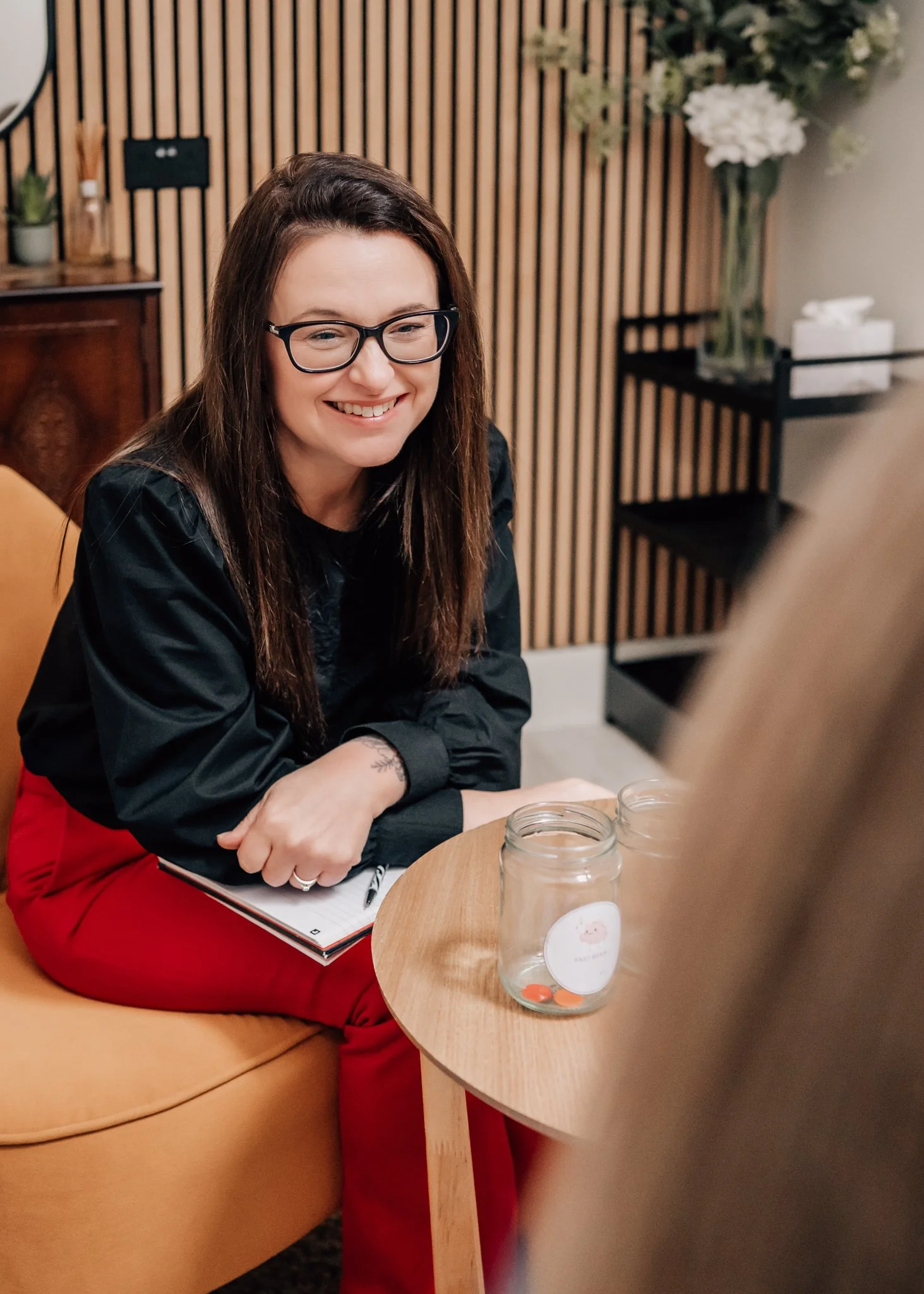
I’m Corrina - a Cognitive Behavioural Hypnotherapist specialising in anxiety, overwhelm, stress relief, fears and phobias. I support both mums and children, helping them navigate life’s challenges with confidence and calm - instead of chaos and guesswork.
This course isn’t something I threw together after one wobbly week.
It’s built from years of professional experience working with families just like yours - and yes, from lived experience as a mum who has also sat on the hallway floor thinking “I genuinely don’t know what else to try.”
So when I teach you these tools, I’m doing it as:
A trained therapist who knows what works, and
A mum who understands how hard it feels when everything kicks off at precisely the wrong moment.
No theories.
No judgement.
Just science-backed, real-world strategies that work - even on the messy days.
Ready to take the next step?
The Investment: £97.00
That’s less than private one to one therapy
But with tools you can use every day, for years.